

Women's shoes - story of a passion
- 15 Jan, 2018
- LT world
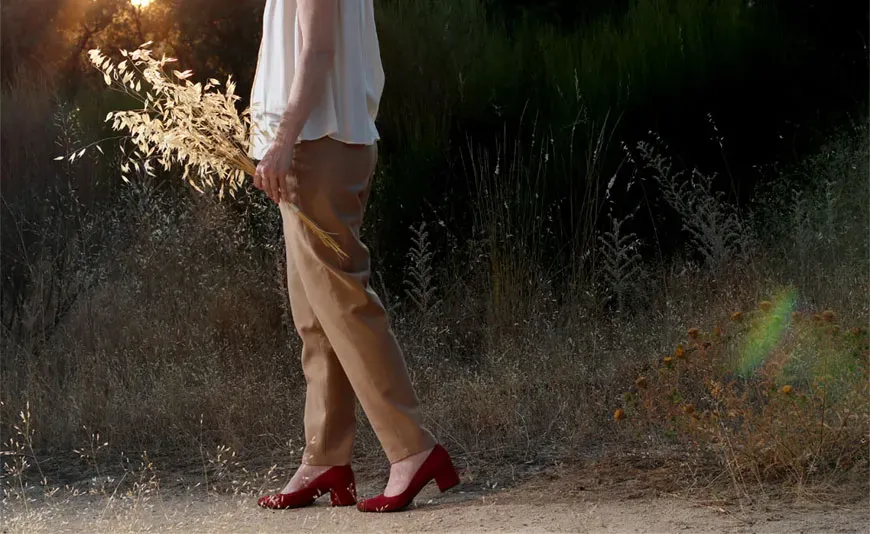
To find the first vestiges of footwear in history we have to go back more than 10,000 years, to find the first representations of footwear. Given the simplicity of the elaboration, it is not surprising that the first shoe of which we have evidence is Egyptian sandals braided with reeds.
Like many other practices and customs, in the world of women's shoes we owe much to the influence of ancient civilizations. A good example of this could be the flat sandals worn by Egyptian women, eminently practical, sandals that were used as protection in rough terrain or on the burning sand. These left the foot practically uncovered, a feature that women took advantage of, adorning their feet with jewelry. In the tomb of Pharaoh Tutankhamun, the first sandals were decorated with gold details.
These first sandals not only fulfilled the function of protecting the feet. From these ancient times, the shoes revealed details about the social position of the wearer, and for many years the sandals have alternately denoted symbols of prestige or poverty, chastity or coquetry. In the Middle Ages, for example, franciscan monks wore wooden sandals as a sign of detachment towards earthly luxuries.
Sandals [The shoes that restored glamour to the female feet]
It was necessary to wait until 1920 to once again elevate the sandals on the altars of fashion. This was achieved by adding heels, regained charm and glamour. At the end of the 20s crazy the newly released fingers with their nails painted bright red, stood out on high-heeled sandals. Famous designers at that time like André Perugia or Salvatore Ferragamo gave free way to their imagination with dress sandals that marked to a large extent the trends of women's shoes to this day. Another milestone that we owe to Ferragamo is the invention of the wedge-shaped heel in 1936, which would later give way to the current platform sandals.
Heel shoes [On top of fashion]
Another of the moments that changed the canons of fashion in the world of shoes, is without a doubt the heel, something that has revolutionized the world of footwear. But it is not a modern revolution. The use of high-heeled shoes has become common since the 12th century in many of the European courts, and these first heeled shoes were not shoes exclusively designed for women, since men were the first to wear them. Louis XIV was famous among other issues for his heeled shoes.
Another fashion of Spanish origin that revolutionized the world of footwear in Europe at the end of the Middle Ages was platform shoes. Every noble of Venice and Florence had at least a couple, of the then famous wooden chapines lined with satin or leather. Of this type of footwear the so-called mules or babuchas, although they have replaced the high platforms for other more moderate or flat soles, something that greatly facilitates the ability to walk with them.
The high-heeled shoes influenced the habit of dressing during the Renaissance, transforming the disposition of the body, enhancing and giving prominence to the figure. During the Baroque, the marked preference for curves, took the fashion for high-heeled shoes to enhance the bust in women, as well as give elegance to the male print, although sometimes it was abused so much by gentlemen, they had to help themselves with the cane in order not to fall (one of the reasons why the cane became fashionable).
With the arrival of the French Revolution, wigs and heels were banned, giving way to a period in which all - men and women - wore flat shoes. But the heels did not take long to resurface from the hand of Luis Felipe II. Since then the masculine clothing was turning towards a more sober style and the high-heeled shoes began to be seen as a sign of femininity, so at the beginning of the 18th century the high heel stopped being used by men to become the exclusive patrimony of women, who began to pace with heels that are designed to enhance women shoes.
The 20th century will be the century of women's shoes. Step by step women are entering the public sphere and work due in part to the fact that they have to supply the men who are going to the war. It is during the inter-war periods when a practical look is imposed: it returns the flat shoes. We have to wait until the 50s of the twentieth century for the high-heeled shoes to re-emerge from the hand of the French designer Charles Jourdan, who defined the precursors of the current stiletto shoes: the current stilettos. Although the name of these shoes to which no footwear lover can resist us, it owes its name to Giacomo Pirandelli, baron of Styletto.
Since then, high-heeled shoes and stilettos have had fervent admirers, as well as detractors, for which, instead of being the pinnacle of fashion for women's shoes, they are the summit of the absurd. Still, always keep a pair of good heels in the bottom of the wardrobe, because when used on special occasions, such as the Cinderella shoes, some heels can work miracles and be a magic wand to enhance any look.
Putting on high-heeled shoes makes the woman's body transform, the legs seem to lengthen, the chest rises and the calves and ankles are enhanced. Not only that, women's shoes transform our way of facing any issue, marking the step instead of following it. Because we can "wear" slippers, "put on" jute sandals, "fit" some dancers, but we "dress" with heels.
Flat shoes [The female shoes for everything]
Although we all sigh when we see some stilettos that we like, the reality is that we can not always be up on high-heeled shoes. Luckily, within the universe of women's shoes, we have some jokers that make our lives easier: flat shoes, the ideal complement for those occasions when we need comfort above all else.
Within the wide variety of styles that exist flat shoes, such as loafers, mulés or slippers... There is a type of low footwear that stands out above all and perfectly represents the feminine essence in the shoes without heels. We talk about the dancers, with a very marked and easily recognizable style.
The origin of the ballerinas shoes is very easy to guess, since as its name suggests it comes from the shoes that were used in the classical ballet. With some differences with respect to the current dancers, this type of footwear began to be used in ballet performances at the beginning of the 19th century, incredible right? A style of shoes which actually has an antiquity of 200 years.
Many designers of footwear, especially in regard to women's shoes, have always found inspiration in the world of the arts. And the dancers are a good example of that. The original ballet shoes made the leap to the streets in the 1940s, when the delicate footwear they wore on the stage was fitted with a rigid sole that makes them much more durable and practical for use as street shoes. Shortly after the trend of the dancers was popularized through the cinema of the hand Audrey Hepburn, wearing some ballerinas when she appeared in the movie "Sabrina", which is why many people use the term sabrinas to refer to the flat pumps.
As you can see, the universe of women's shoes has evolved step by step throughout history and especially in the last decades of the 20th century until this days. Many trends coexist in the dressing room of any woman, where we can find some shoes for every moment.

 Español